A comprehensive construction site setup checklist ensures a project begins efficiently by organizing essential requirements such as perimeter fencing, sanitation facilities, and waste management systems. Contractors must also prioritize permit acquisition, utility planning, and site logistics to maintain safety compliance and facilitate smooth mobilization for all crew members.
Mobilizing a construction site often feels like a race against hidden bottlenecks. A missed delivery or a misplaced perimeter fence can halt progress before the first shovel hits the ground. At SiteShield Fencing & Site Services, we recognize that a disorganized setup does more than just delay your schedule; it exposes your firm to liability and avoidable OSHA penalties. Efficient site setup requires a sophisticated approach to logistics that prioritizes safety and regulatory compliance from the moment you arrive on site. In this guide, we provide a comprehensive checklist to ensure your mobilization is seamless. We will explore essential phases including perimeter security, OSHA 1926.51 sanitation standards, and California debris diversion requirements. You will also discover the strategic advantage of consolidating your site services to maintain a rigorous project timeline.
The High Cost of Poor Site Mobilization
The first 48 hours of any project in the North Bay define its trajectory. In Vallejo, where site security and local code compliance are stringent, a flawed mobilization plan creates immediate financial leaks. When a crew arrives to find an unsecured perimeter or missing sanitation facilities, the contractor pays for skilled labor to stand idle. These hidden costs often exceed the price of the services themselves; they represent lost momentum that is difficult to recover.
Poor planning also risks heavy OSHA fines under 29 CFR 1926. Missing fire extinguishers, which must be rated at least 2A for every 3,000 square feet of protected building area, or failing to provide adequate sanitation can halt a job before the first inspection. Furthermore, managing five different vendors for fencing, toilets, and equipment often leads to logistics gridlock. This occurs when multiple delivery trucks attempt to access a tight job site simultaneously, resulting in redundant mobilization fees and blocked access routes.
Approaching your construction site setup checklist as a single logistics challenge rather than a series of errands saves significant overhead. By utilizing comprehensive site solutions, you eliminate the communication gaps that occur between disparate suppliers. This one-call strategy ensures that every component, from temporary fencing to excavators, arrives in a coordinated sequence. You can learn more about SiteShield Fencing & Site Services to see how local expertise mitigates these early-phase risks by anticipating the specific constraints of Vallejo properties.
Phase 1: Securing the Perimeter and Access Control
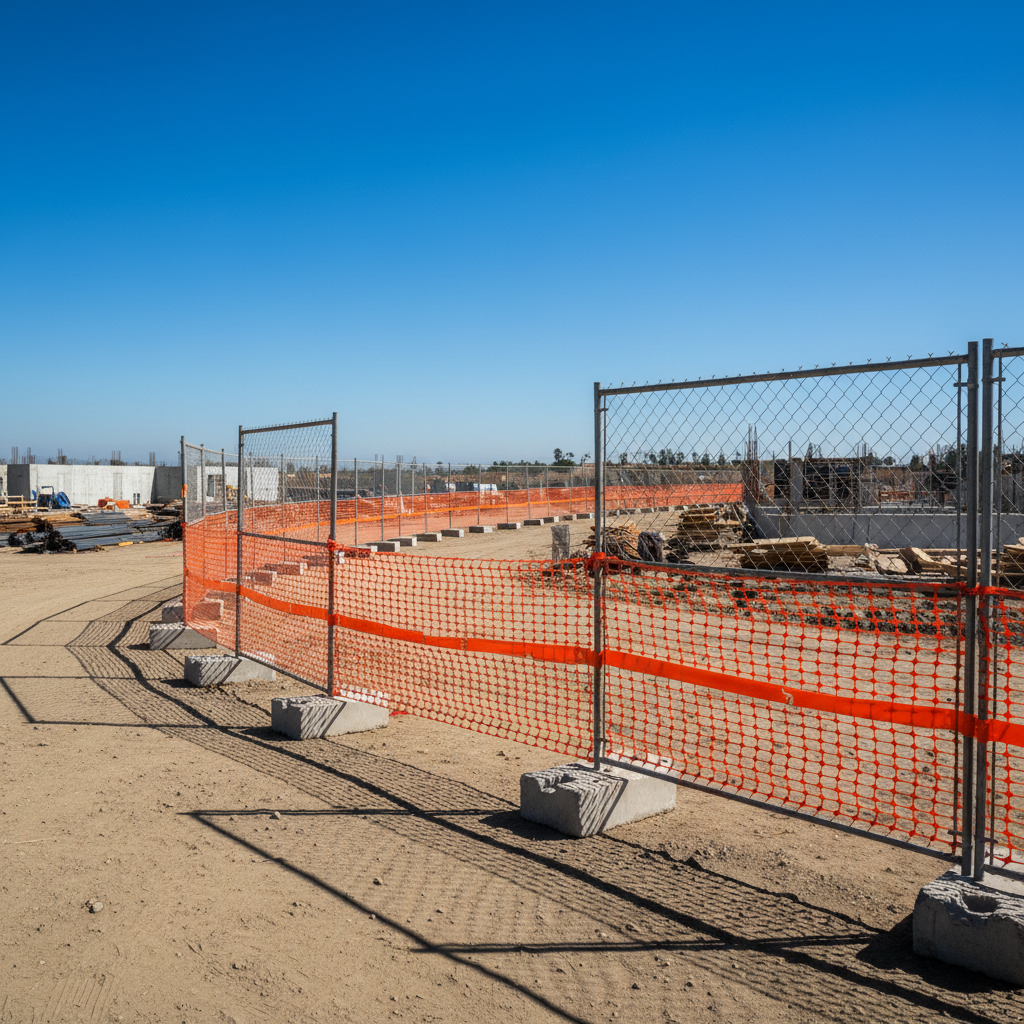
Establishing a robust physical boundary is the first active step in any professional mobilization. For your construction site setup checklist, the selection of fencing should be dictated by the project duration and the ground conditions of the specific Vallejo location. Temporary panel fencing, supported by stands and weighted sandbags, offers maximum flexibility for short term renovations or sites where the substrate cannot be punctured. For multi year developments or projects in high wind areas of the North Bay, post driven fencing provides superior perimeter security. These installations are physically anchored into the soil, making them far more difficult to breach or displace.
In the Bay Area, where tool and equipment theft remains a persistent threat, physical barriers alone are rarely sufficient. Security cameras should be integrated into the temporary fencing and security plan from day one. Positioning solar powered or cellular units to cover high value staging areas, where excavators and weather sensitive materials are kept, creates an immediate deterrent and provides real time oversight before the site office is even fully powered.
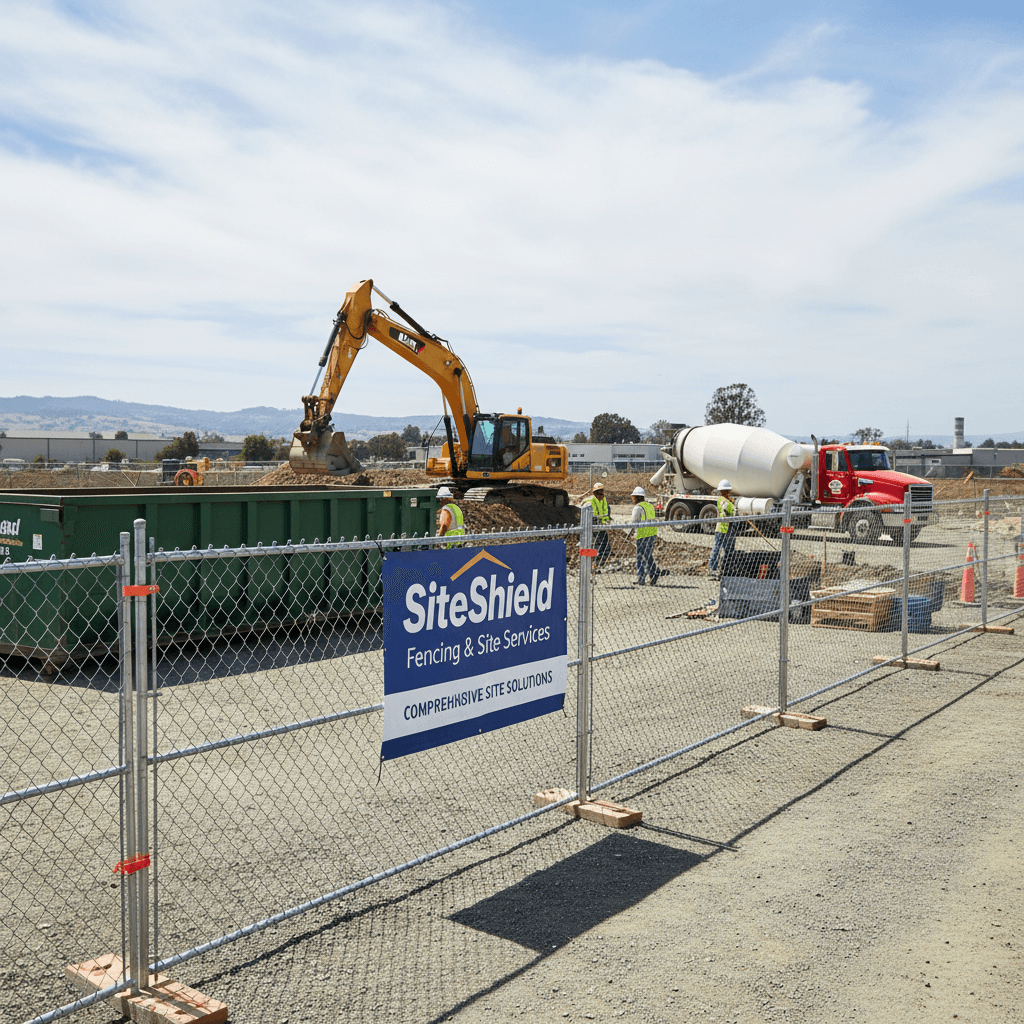
Strategic planning of access routes and gate placement is equally vital to prevent future bottlenecking. Gates must be wide enough to accommodate the ingress and egress of heavy equipment. A standard ten foot opening may suffice for light trucks, but a double drive gate is often required for the clear passage of large excavators or concrete mixers. By mapping these entries relative to the street and planned work zones, you ensure that site traffic flows efficiently and does not obstruct future sanitation or waste management zones. This integrated approach to comprehensive site solutions turns a simple fence into a sophisticated management tool that protects both your assets and your schedule.
Phase 2: Sanitation and Compliance (OSHA 1926.51)
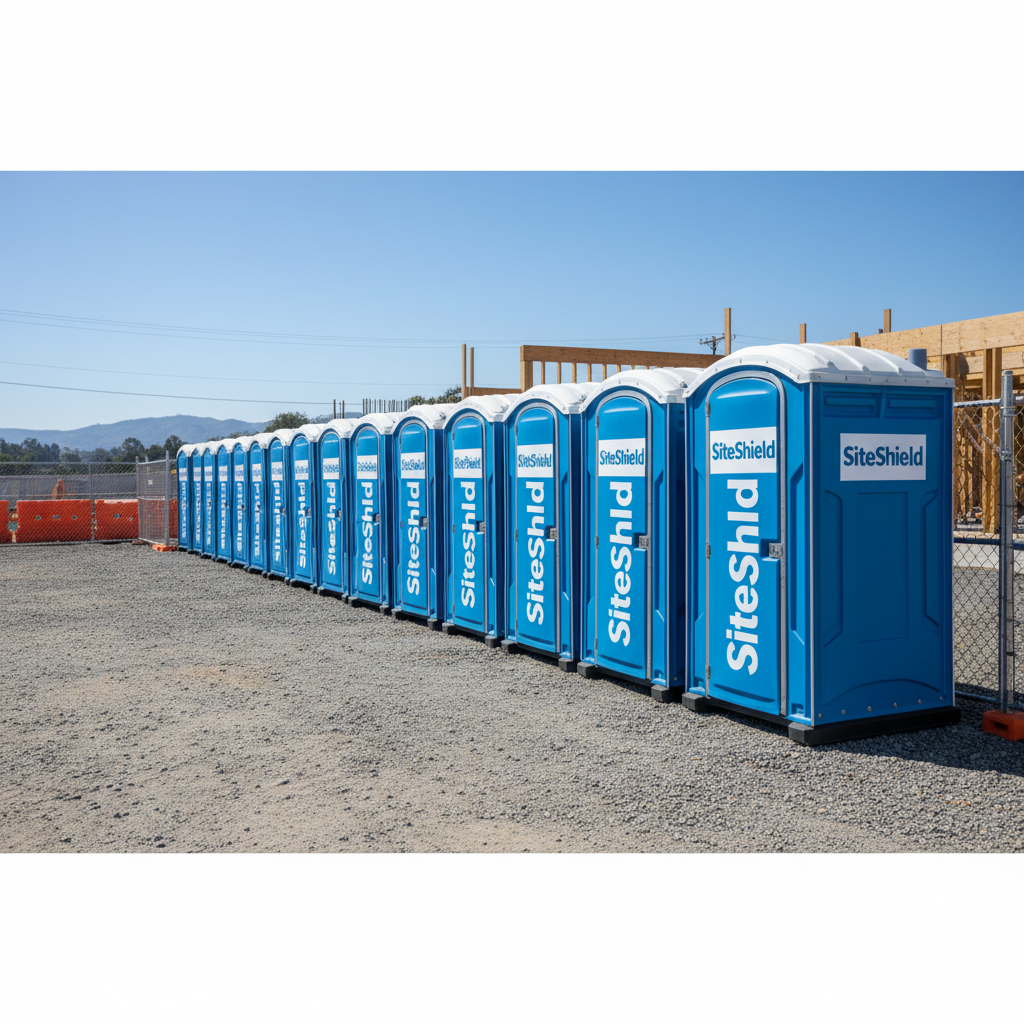
Once the perimeter is secure, the focus of your construction site setup checklist must shift to human infrastructure. OSHA 1926.51 is unambiguous regarding sanitation: you must provide at least one toilet for every 20 employees or fewer. For larger North Bay crews of 20 to 200, the requirement changes to one toilet and one urinal for every 40 workers. Failing to meet these ratios is a fast track to citations and, more importantly, a significant drop in crew morale. Clean, well maintained facilities are the foundation of a professional work environment.
Placement is a technical decision that impacts both site hygiene and operational efficiency. Units and handwashing stations must be situated on level ground that remains accessible to pumper trucks even during inclement weather. Placing facilities too far from the work zone wastes labor hours; placing them in the path of heavy equipment risks damage and service blockages.
Employee Count | Minimum Number of Toilets |
|---|---|
20 or fewer | 1 |
20 to 200 | 1 toilet and 1 urinal per 40 workers |
200 or more | 1 toilet and 1 urinal per 50 workers |
As a local provider of comprehensive site solutions, SiteShield Fencing & Site Services addresses the common failures of national brokers. Brokers often miss service windows because they lack local dispatch control, leaving sites with overflowing units that violate health codes. Our Vallejo based team understands the specific geography of the North Bay, ensuring that servicing happens on schedule. By integrating sanitation with your temporary fencing and security, you guarantee that the foundation of your site remains compliant and productive from day one.
Phase 3: Waste Management and California Debris Diversion

Managing debris in the North Bay is a matter of logistical precision and strict legal compliance. Your construction site setup checklist should prioritize the strategic placement of roll-off dumpsters to facilitate easy swap-outs as the project progresses. For vertical builds, safety and regulation dictate specific disposal methods. If a project requires dropping debris from a height of more than 20 feet to a point outside the exterior walls of the building, OSHA requires the use of an enclosed debris chute. This prevents falling hazards and contains dust, keeping the site compliant and safe for ground-level crews.
In California, waste management is further governed by CALGreen requirements, which typically mandate a minimum 65% diversion of non-hazardous construction and demolition waste from landfills. Achieving this goal requires dedicated staging areas for multiple bins to separate wood, metal, and concrete from mixed municipal waste. Mismanagement here leads to cross-contamination, which can void recycling credits and result in significant cost increases at the transfer station.
Material Type | Diversion Potential | Disposal Method |
|---|---|---|
Clean Wood | High | Dedicated Roll-off |
Concrete/Inert | High | Dedicated Low-boy |
Mixed Debris | Low | General Roll-off |
SiteShield provides comprehensive site solutions that simplify these logistics by coordinating dumpster placement with your temporary fencing and security layout. By ensuring dumpsters are positioned on stable, accessible ground near the site exit, you avoid the common pitfall of a full bin blocking the path of an incoming delivery or an excavator. Proper staging during the mobilization phase ensures that debris diversion remains an automated part of your workflow rather than a last-minute compliance hurdle.
Phase 4: Operational Support, Storage, and Scaffolding
Beyond debris management, the physical security of assets requires weather-tight on-site storage. High-value power tools, sensitive electrical components, and moisture-sensitive finish materials must be protected from both the North Bay’s coastal humidity and the regional threat of theft. Integrating 20-foot or 40-foot steel storage containers into your construction site setup checklist ensures these items remain locked down the moment they arrive. These units should be positioned on level ground, ideally within the direct line of sight of your solar-powered security cameras for maximum deterrence.
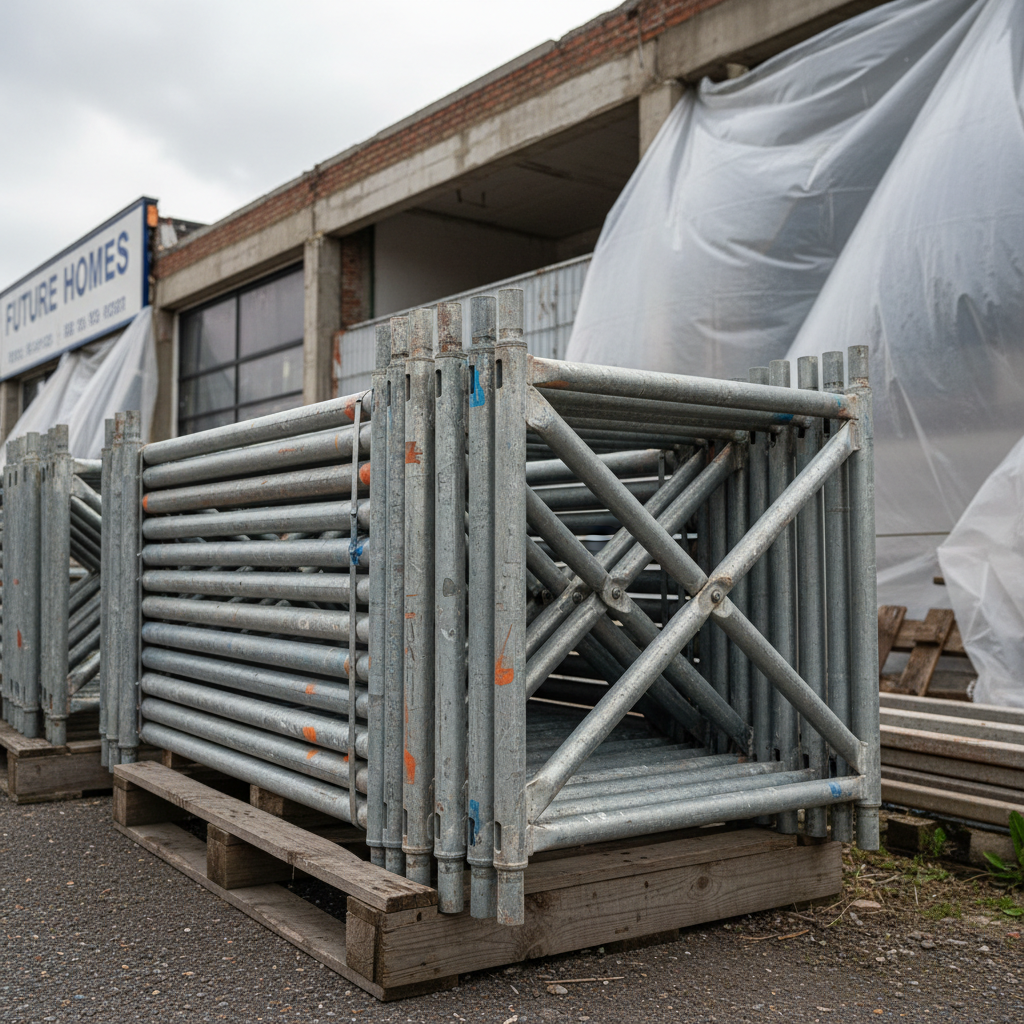
Scaffolding delivery requires early-stage coordination to prevent site gridlock. Because scaffolding components occupy a significant footprint before assembly, staging areas must be mapped to avoid obstructing the path of roll-off dumpsters. If scaffolding is dropped without regard for the dumpster swap-out route, you risk costly downtime when waste hauling trucks cannot access the bins. SiteShield manages these logistics as part of comprehensive site solutions, ensuring that vertical access tools do not interfere with waste management or heavy equipment movement.
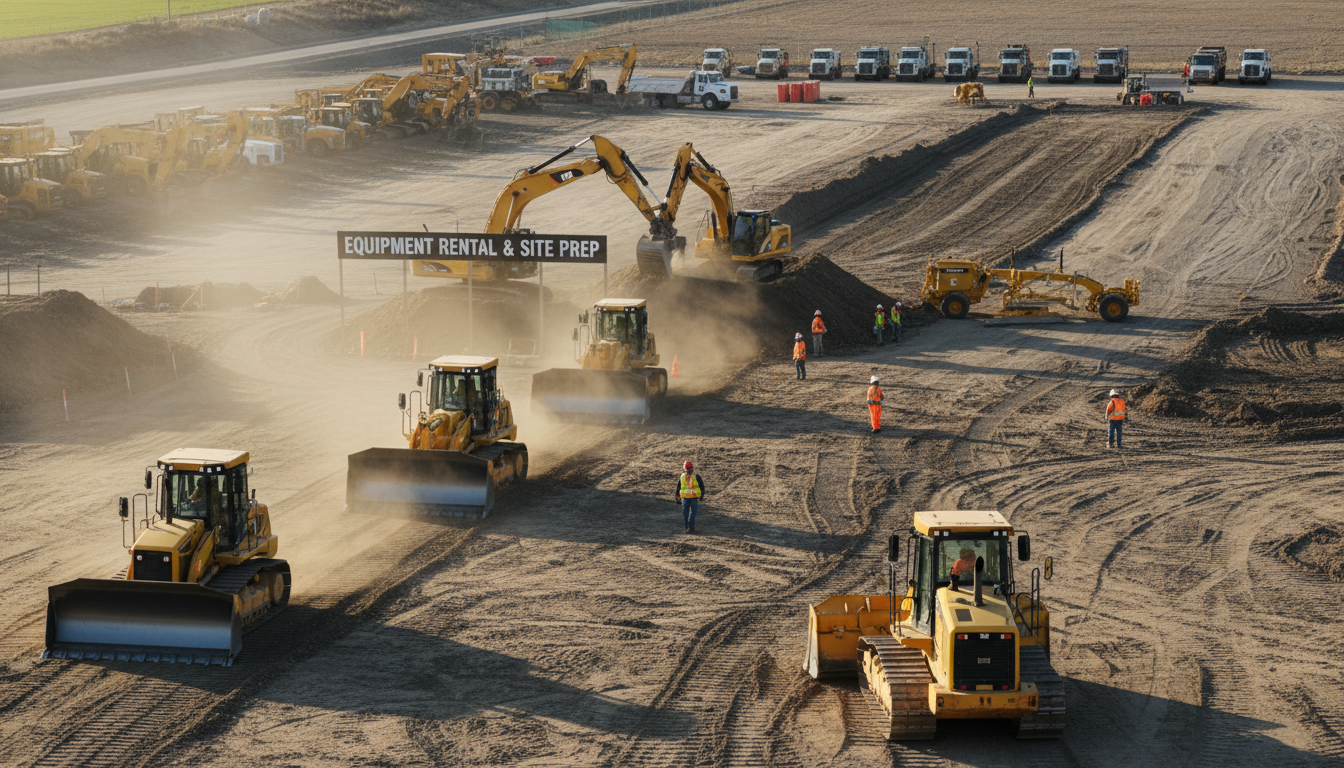
Operational support also extends to the machinery required for site prep and masonry. By sourcing excavators and concrete mixers from the same partner providing your temporary fencing and security, you eliminate the scheduling conflicts common with multiple vendors. This integrated approach ensures that specialized equipment arrives exactly when the site is secured and ready for work, keeping the project on schedule from the first shovel in the ground.
The One Vendor Advantage: Streamlining Your Site Schedule
Managing a high-stakes project in the North Bay becomes exponentially more complex when you are juggling five different invoices and five separate points of contact. The administrative overhead of tracking disparate delivery windows for sanitation, fencing, dumpsters, and equipment leads to logistics gridlock. This occurs when a fence crew installs panels that inadvertently block the only viable path for a 40-yard roll-off swap-out; similarly, a portable toilet delivery scheduled at the exact moment an excavator is being offloaded on a narrow Vallejo street creates unnecessary downtime.
By consolidating your construction site setup checklist through a single provider of comprehensive site solutions, you align these moving parts into a synchronized timeline. A local partner understands that North Bay job sites often have limited staging areas and strict noise or traffic ordinances. Coordinating the arrival of temporary fencing and security alongside waste management ensures that one service never handicaps the other.
Management Factor | Multi-Vendor Approach | Single-Source Strategy |
|---|---|---|
Administrative Load | 5+ Invoices and Calls | 1 Invoice and Point of Contact |
Schedule Conflict | High (Incompatible windows) | Low (Coordinated sequence) |
Site Layout | Fragmented (Accidental blocks) | Unified (Planned access routes) |
This unified approach provides greater visibility into your project’s burn rate and mobilization timeline. When you learn about SiteShield Fencing & Site Services, it becomes clear that local expertise in Vallejo allows for more than just equipment delivery; it yields a strategic layout that respects the physical constraints of your specific property.
Construction Site Safety and Fire Prevention Checklist
Finalizing your construction site setup checklist requires a rigorous focus on fire prevention and environmental compliance. Fire safety is governed by specific density requirements; OSHA mandates at least one 2A-rated fire extinguisher for every 3,000 square feet of protected building area. These units must be highly visible and located so that the travel distance from any point in the protected area to the nearest extinguisher does not exceed 100 feet. In the North Bay, environmental stewardship is equally critical. You must secure necessary stormwater permits and implement Best Management Practices to prevent sediment runoff from entering the Bay, which often involves silt fences or drain covers integrated with your temporary fencing and security layout.
A successful setup plan includes a protocol for daily closeouts to ensure the site remains secure and compliant overnight. These recurring checks prevent minor issues from escalating into major liabilities:
Inspect the entire perimeter for fence stability, especially after high-wind events common in the Vallejo area.
Verify that solar-powered security camera angles have not shifted and that lenses remain unobstructed by dust or site debris.
Confirm all gates are double-locked and access points for heavy equipment are clear for the following morning's arrivals.
Check that comprehensive site solutions like portable toilets and roll-off dumpsters are positioned away from drainage inlets to satisfy stormwater permit requirements.
Ensure all fire extinguishers remain charged and accessible, with no materials or equipment blocking the path to them.
By incorporating these safety and compliance measures into your about SiteShield Fencing & Site Services mobilization plan, you protect your crew, your assets, and the surrounding North Bay environment.
Setting up a construction site requires careful planning and attention to every detail on your checklist. By organizing your mobilization process early, you ensure a safer and more efficient project from day one. If you want expert help managing these essential logistics, our team is ready to support your next build. Feel free to explore our range of professional Services to see how we can streamline your site setup. We are here to help you focus on the construction while we handle the foundational site needs.