Effective contractors equipment rental relies on precise scheduling and the verification of safety standards for heavy machinery like scaffolding, excavators, and mixers. Project managers can maximize productivity by selecting reputable rental partners that guarantee equipment compliance and timely delivery to prevent site delays.
Managing a high stakes construction project requires more than just skilled labor; it demands the seamless synchronization of heavy machinery and safety structures. Every hour an excavator sits idle or a crew waits for scaffolding assembly is an hour of lost revenue. At SiteShield Fencing and Site Services, we understand that fragmented equipment management often leads to avoidable bottlenecks and safety lapses on complex job sites. This guide examines the critical coordination of earthmoving units, vertical access systems, and material mixers to streamline your operations. You will learn how to optimize your rental strategy during site preparation, maintain strict safety standards for scaffolding, and navigate the logistics of delivery timing. By mastering these operational nuances, you can reduce overhead and ensure your project remains both secure and profitable from groundbreaking to final inspection.
The Strategic Approach to Contractors Equipment Rental
Construction efficiency in Vallejo and Solano County often hinges on a concept we call site synergy. This is the strategic alignment of equipment arrival, placement, and usage to ensure one phase of work never bottlenecks the next. High performing projects rely on more than just securing a machine; they depend on the precise timing and coordination of those rentals.
General contractors frequently face a heavy logistical burden when managing multiple vendors for different site needs. Using a single source provider for fencing, scaffolding, and earthmoving assets eliminates the friction of staggered communication and conflicting delivery windows. This consolidated approach allows for a streamlined workflow where the perimeter is secured at the exact moment the heavy machinery arrives. When one partner handles the initial setup, the vertical access, and the machinery, the risk of a cluttered or unsecure job site drops significantly.
Adopting a smart contractors equipment rental strategy is also becoming the standard for preserving capital in the California market. By choosing to rent rather than buy, businesses can keep their funds liquid for essential expenses like payroll and rising material costs. This financial flexibility, combined with the operational ease of comprehensive site solutions, keeps a project lean and responsive. Our approach ensures your equipment footprint is optimized from the moment the first fence post is driven until the final inspection is signed off.
Phase One: Earthmoving and Site Preparation with Excavator Rentals
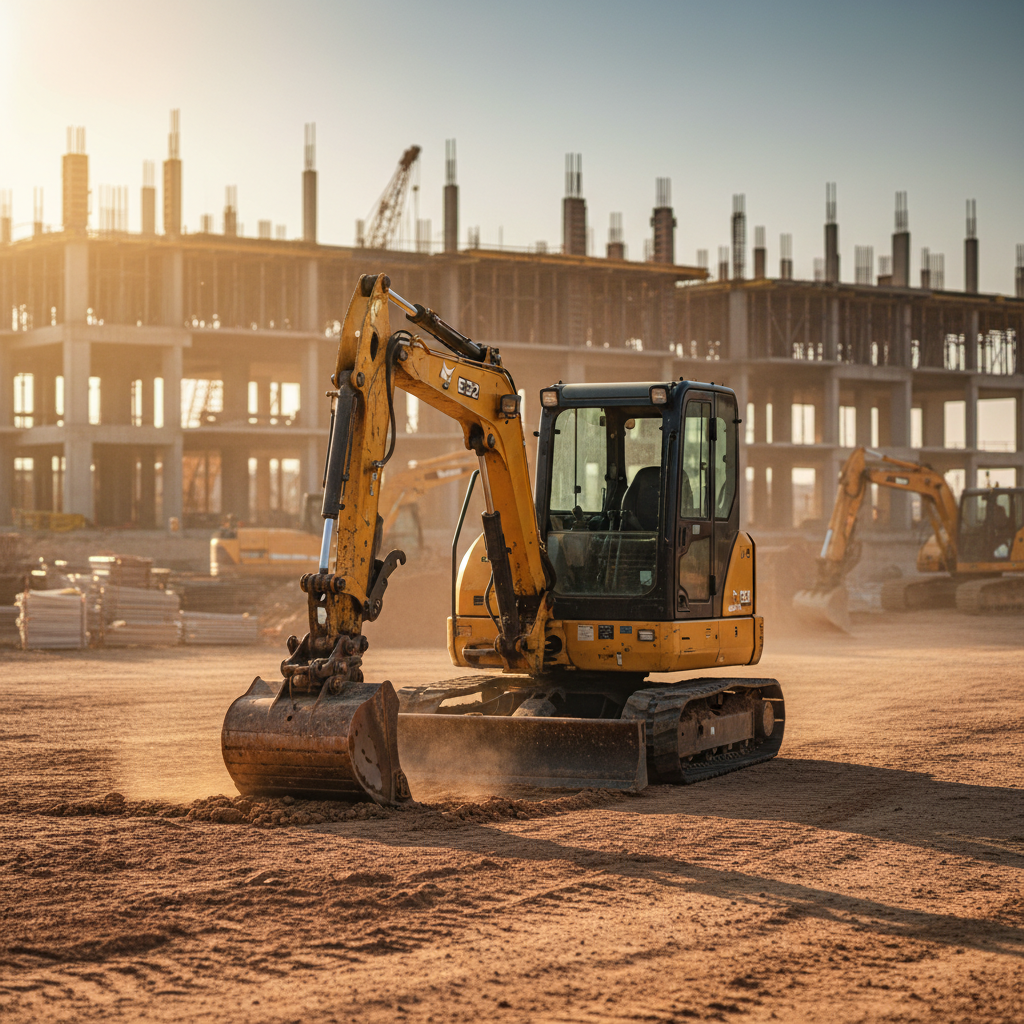
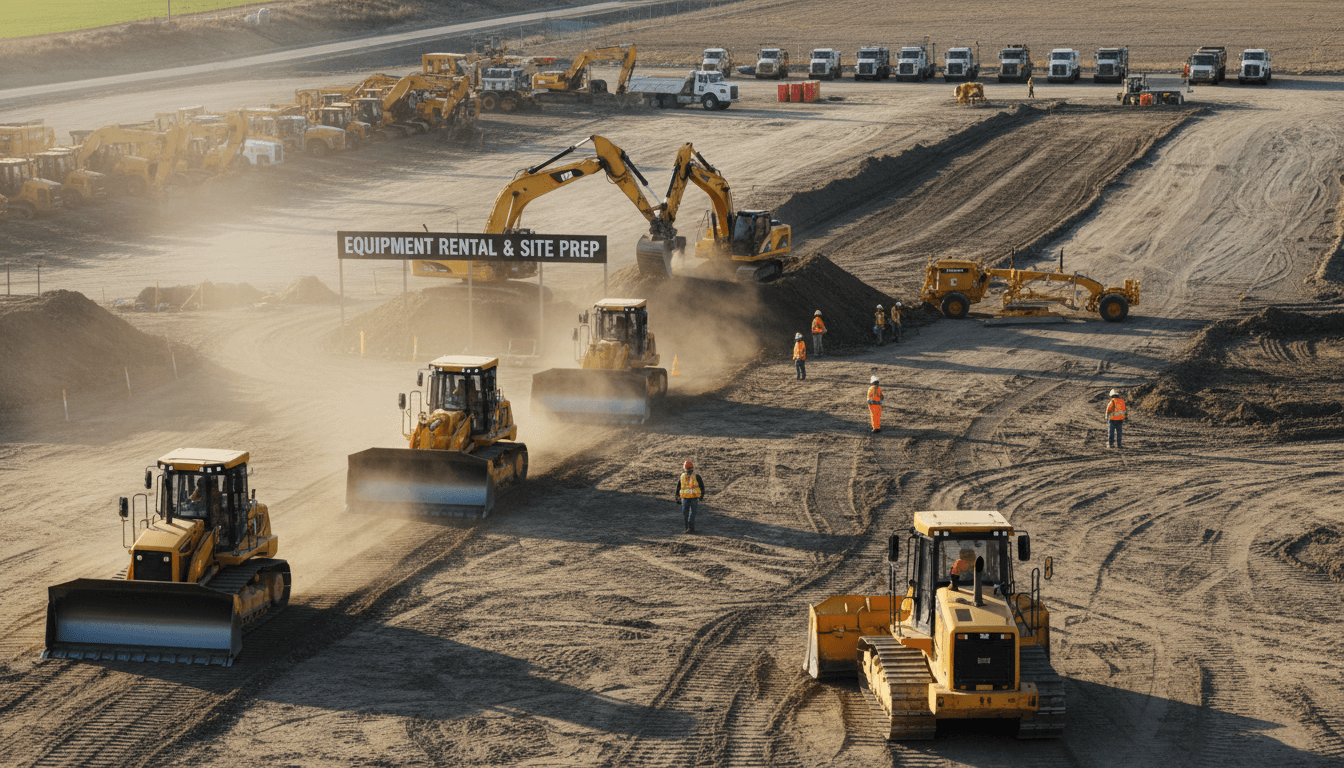
The initial breaking of ground sets the tempo for the entire project. Selecting the appropriate machinery for earthmoving is the first critical decision in this phase. For many residential projects in Vallejo, where property lines are tight and access is limited, a mini excavator is the practical choice. These machines offer the precision needed for utility trenching and foundation footings without the risk of damaging neighboring structures. Conversely, larger commercial developments in Solano County require standard excavators to handle high volume soil displacement and heavy lifting.
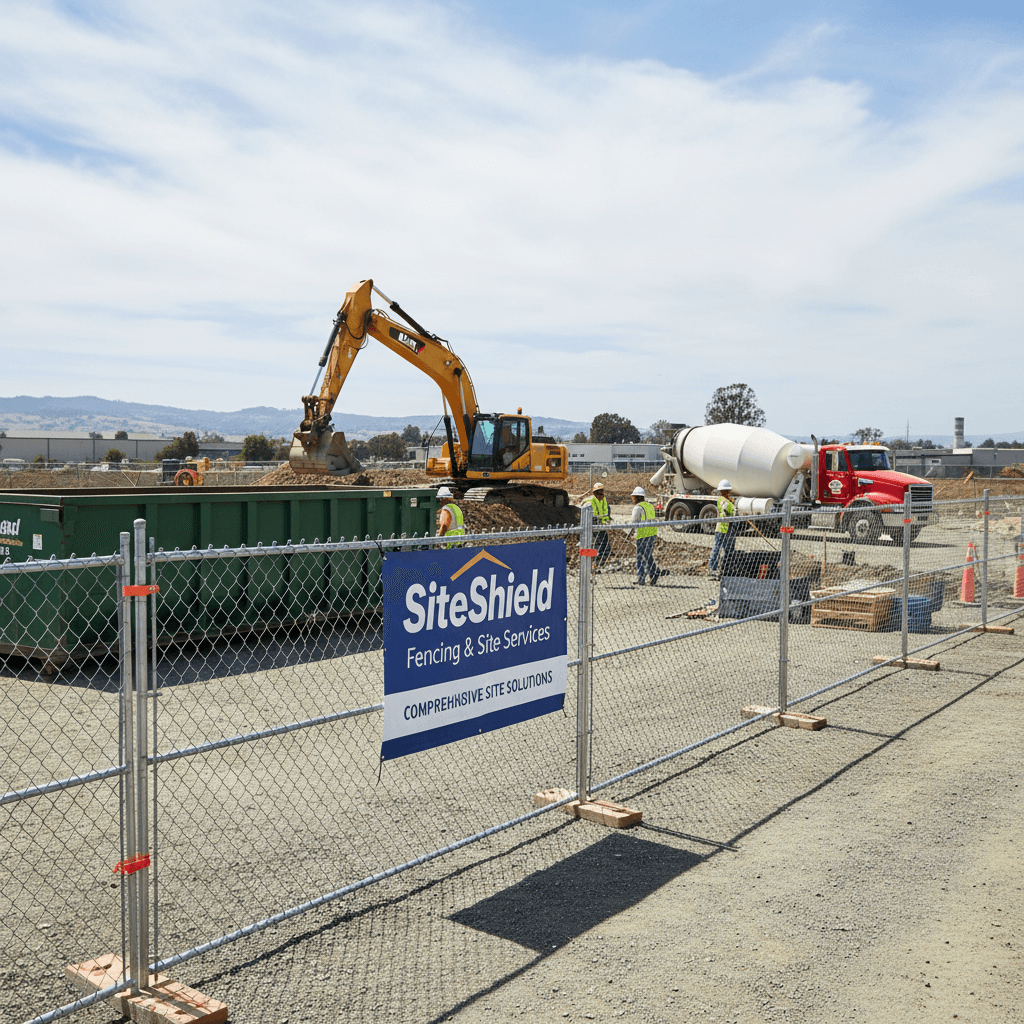
Effective site preparation requires a synchronized arrival of assets. If an excavator begins work before the temporary fencing is installed, the property remains an open liability. Likewise, having a dumpster staged prior to the first bucket of dirt being moved prevents the double handling of debris. This integrated approach ensures a secure, clean perimeter from the first hour of operation, keeping the workflow organized rather than reactionary.
Choosing a specialized contractors equipment rental partner also solves the challenge of California’s strict environmental regulations. State standards for emissions and fuel efficiency are among the highest in the nation. By choosing to rent, contractors gain access to late model machinery equipped with Tier 4 Final engines. These newer units minimize the carbon footprint of the job site while maximizing uptime through superior reliability. To learn more about SiteShield Fencing & Site Services and our inventory of earthmoving assets, you can contact us for a rental quote to ensure your next project starts with the right equipment and a compliant, efficient footprint.
Phase Two: Ensuring Vertical Safety with Compliant Scaffolding Rental
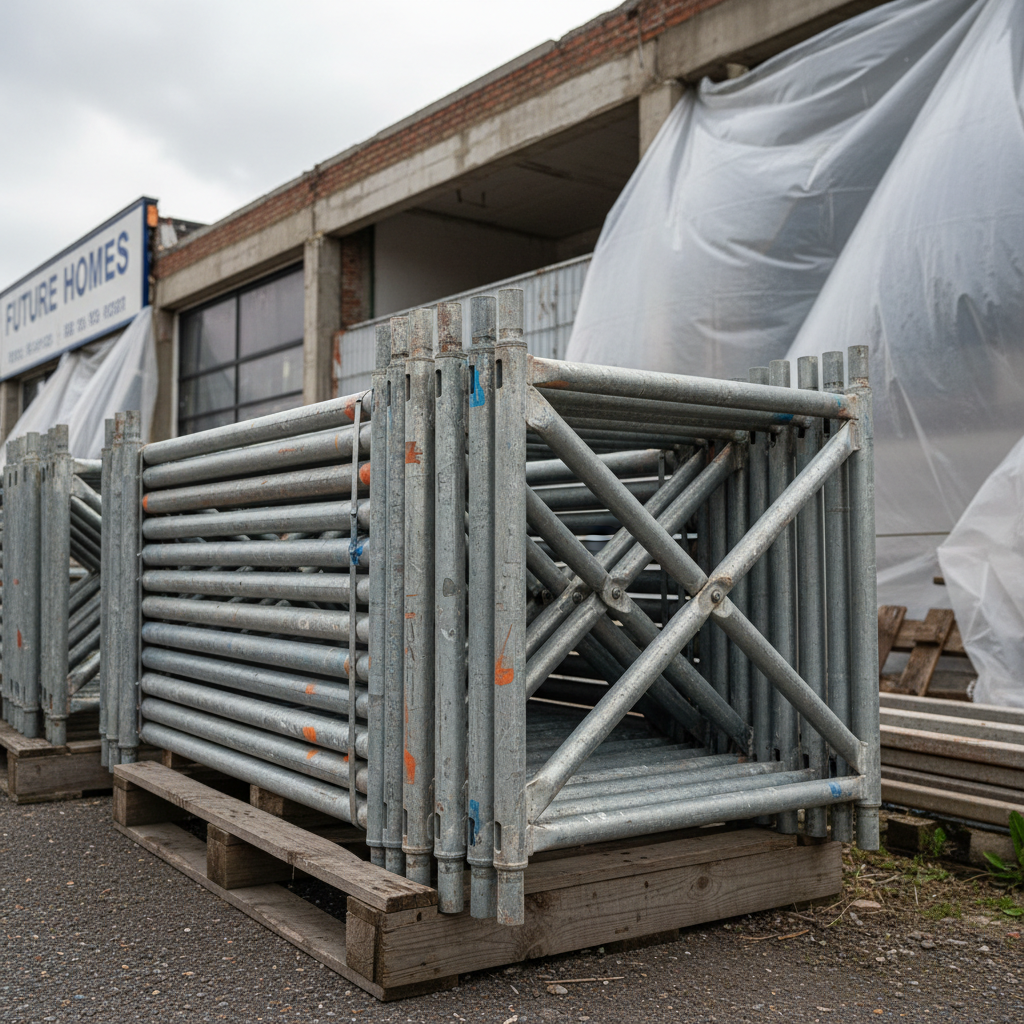
As the foundation settles and site prep concludes, the focus shifts from the soil to the structure. This transition requires a significant change in safety priorities. While ground work focuses on stability and perimeter security, vertical work introduces the risks of height and weight distribution. Choosing the right contractors equipment rental for scaffolding is not merely about reaching the roofline; it is about establishing a high-performance platform for masonry, framing, and painting crews to operate without hesitation.
A common safety gap in the rental market is the delivery of equipment that barely meets the minimum standards for stability. SiteShield prioritizes OSHA 1926.451 compliance, specifically the 4x load capacity rule. This regulation dictates that a scaffold must be capable of supporting, without failure, its own weight and at least four times the maximum intended load applied to it. In the varied terrain of Solano County, a platform that feels sturdy during a morning walk through must remain just as stable when loaded with hundreds of pounds of mortar, tools, or framing lumber by midday.
Professional contractors must verify that a competent person conducts a thorough inspection of the scaffold every seven days, or after any incident that could affect structural integrity. This is a legal requirement designed to catch shifting base plates or loosened cross braces before they become hazards. When evaluating rental options, the material quality is the primary differentiator. We prioritize high quality galvanized steel frames. These units offer superior rigidity and corrosion resistance compared to the thinner gauge, painted alternatives often found at national chains. Galvanized steel handles the constant wear and tear of a busy job site without compromising its load bearing specifications. By integrating these comprehensive site solutions into your workflow, you bridge the gap between simple access and true site safety.
Phase Three: On Site Material Production with Concrete Mixer Rentals
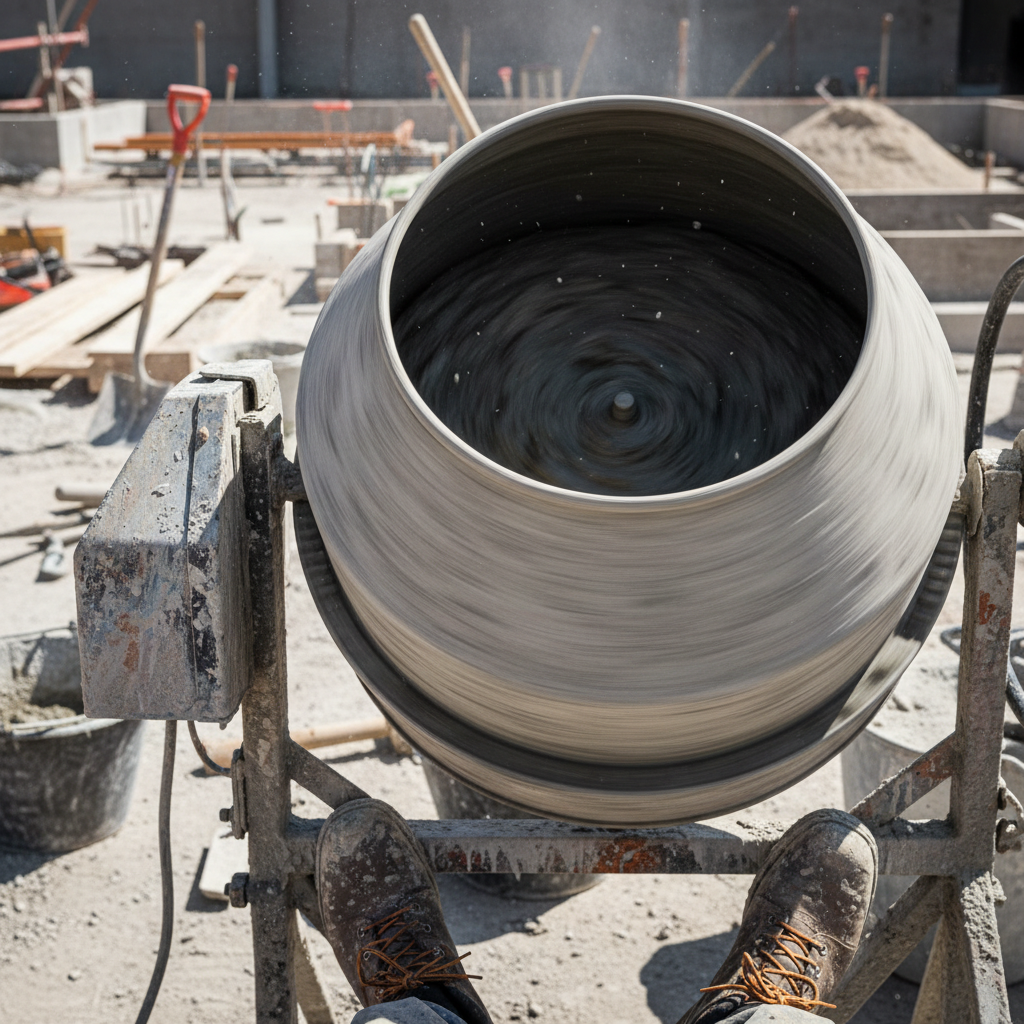
Once the vertical structure begins to take shape, the logistical focus shifts to precision material production. While large scale pours require ready-mix fleets, smaller essential tasks like setting fence posts, pouring footings, or completing small utility slabs often make a portable concrete mixer the more economical choice. Relying on a delivery truck for these smaller volumes frequently results in expensive short-load fees and the stress of a ticking clock. By integrating a mixer into your contractors equipment rental plan, you gain total control over the pour rate and consistency without the overhead of a large fleet delivery.
Strategic timing is vital during this mid-project transition. Aim to coordinate the arrival of your mixer just as the earthmoving phase concludes. This allows your crew to pour footings immediately after the excavator has cleared the area, but before the site footprint becomes restricted by fully assembled scaffolding.
Choosing to rent this equipment also eliminates the significant maintenance burden associated with concrete machinery. Mixers require meticulous cleaning and regular engine service to remain operational, yet they often sit idle for weeks between masonry phases. Utilizing these comprehensive site solutions ensures you have a high performance machine only when the project demands it, removing the need for long term storage in a crowded yard. You can contact us for a rental quote to align your material production needs with your current project timeline.
The Rent vs Buy Debate for Modern California Contractors
Transitioning from individual machine logistics to the broader financial health of a project requires a hard look at the balance sheet. For many Vallejo firms, the decision to opt for a contractors equipment rental strategy over ownership is driven by the desire to avoid dead capital. Owned equipment is an anchor; it requires continuous insurance, storage in a secure yard, and a dedicated maintenance schedule, even when it is not generating revenue. By renting, these fixed costs are converted into variable costs that only exist when a project is active and billing.
Financial experts often point to the three year rule as a benchmark for profitability. If a project timeline is shorter than three years, or if a specific machine will not be utilized for at least 60 to 70 percent of the work year, renting is almost always more profitable. This approach preserves liquidity for payroll and material costs while allowing contractors to leverage tax benefits. Rental payments are typically considered direct business expenses, which can be simpler to deduct than managing the complex depreciation schedules of a capitalized asset. While Section 179 is often discussed in the context of purchasing, the immediate tax deduction of rental fees provides a clean, predictable way to lower a business's taxable income without taking on long term debt.
Logistically, the benefits of local comprehensive site solutions extend to the bottom line through reduced transport fees. Shipping heavy machinery or bulky scaffolding from across the state introduces significant freight costs and potential delays. Working with a provider based in Vallejo ensures that delivery fees remain a minor line item rather than a project hurdle. When you contact us for a rental quote, we focus on these localized efficiencies to keep your overhead low and your site moving.
Operational Logistics: Timing Deliveries and Site Security
A cluttered job site is more than an inconvenience; it is a safety hazard and a productivity killer. On tight residential lots in Vallejo, the logistical nightmare of a gridlocked site occurs when an excavator, a flatbed of scaffolding, and a concrete mixer all arrive in the same four hour window. Without a clear footprint for staging, crews waste hours shuffling equipment just to create a path for work. Avoiding this requires a disciplined, staggered delivery schedule that mirrors the project’s actual progression.
We recommend a tiered arrival approach to maintain spatial efficiency:
Delivery Phase | Asset Type | Strategic Timing |
|---|---|---|
Phase 1: Security | Temp Fencing & Dumpsters | Day 0: Before ground breaking |
Phase 2: Earthwork | Excavator | Day 1: As soon as the perimeter is secure |
Phase 3: Vertical | Scaffolding | Day 5 to 7: Once the foundation or excavation is set |
Phase 4: Production | Concrete Mixer | On-call: Once the vertical frames are standing |
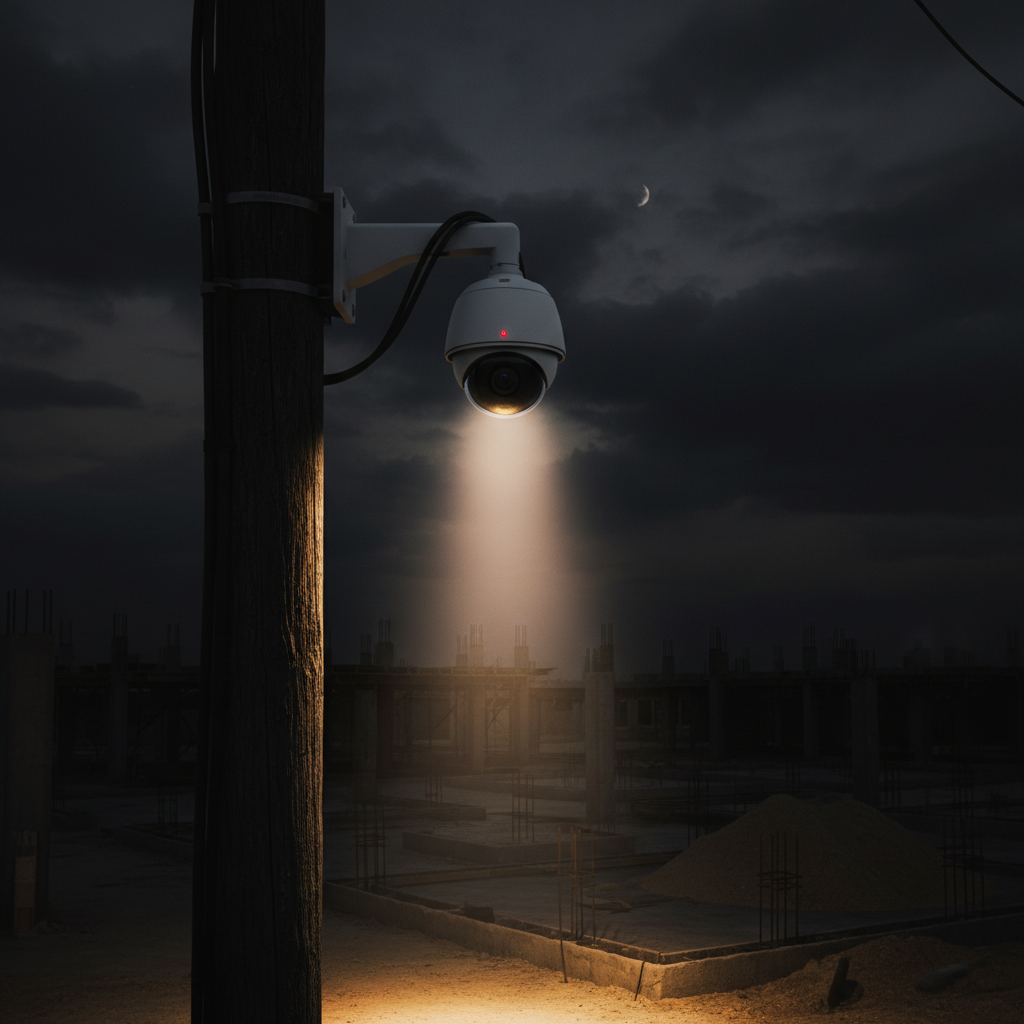
By sourcing these comprehensive site solutions from a single provider, you allow our logistics team to synchronize these drops and adjust for real-time site conditions. Furthermore, a crowded site with high-value assets becomes a target for theft during off-hours. Integrating site-monitored security cameras ensures that your contractors equipment rental inventory remains protected overnight. This proactive oversight prevents the costly delays and insurance headaches associated with stolen machinery or materials, keeping your project on schedule and within budget.
Scaffolding Safety Standards to Verify Before Use
Maintaining site security involves more than cameras; it requires rigorous physical inspections of your vertical access assets. Before any worker steps onto a platform, a competent person must verify that the contractors equipment rental assembly meets OSHA 1926.451 standards. This checklist serves as a baseline for every setup:
Material Integrity: Inspect frames for structural rust, deep dents, or compromised welds.
Brace Verification: Ensure all cross braces are present, straight, and securely locked.
Base Stability: Check that base plates are centered on mud sills, especially on the varied, often uneven terrain found in Vallejo.
Load Labeling: Confirm the maximum weight capacity is clearly marked and understood by all crews.
Integrating these comprehensive site solutions ensures that productivity never comes at the cost of safety. To learn more about SiteShield Fencing & Site Services or to contact us for a rental quote, reach out to our local logistics team today.
Successfully managing a busy construction site requires careful scheduling and clear communication between equipment rentals. When you synchronize your scaffolding, excavators, and mixers effectively, you reduce downtime and keep your project on track. If you want expert help streamlining this coordination or managing your site logistics, our team is here to support you. We invite you to explore our full range of Services to see how we can assist with your next build. Professional oversight ensures every piece of equipment works in harmony, so your timeline stays secure.